
Is Ceramic Coating Worth It? Here’s the Honest Answer
Ceramic coating is the most oversold product in the detailing world, which is a shame, because it’s genuinely good when it’s applied properly to a car that’s a good candidate. Here are the nine reasons Tulsa drivers actually buy it — followed by an honest account of what it will not do, and when we would tell you to spend the money elsewhere.
1. It resists UV fade
Oklahoma sun is brutal on clear coat. UV oxidation is what turns black paint chalky grey and pulls red toward pink, and it happens gradually enough that most people don’t notice until they park next to a newer version of their own car. A coating takes that exposure instead of your paint.
2. Washing gets dramatically easier
This is the benefit owners actually notice week to week. Dirt and road film bond to the coating rather than to your clear coat, so most of it comes off with a rinse and a gentle wash instead of scrubbing. People who coat a vehicle almost always mention this first.
3. Water beads and sheets off
The hydrophobic effect is the one everyone has seen in videos, and it is real. Water pulls into tight beads and runs off, taking dust with it. It also means fewer water spots, because less water sits on the panel long enough to dry and leave minerals behind.
4. It resists chemical etching
Bird droppings, bug splatter and tree sap are acidic, and in Oklahoma summer heat they can etch into unprotected clear coat within hours. A coating gives you a sacrificial barrier and, more practically, buys you time to get it off before damage is permanent.
5. Hard water spots stop being permanent
Sprinkler overspray and washing in direct sun leave mineral rings that etch into bare clear coat. On a coated surface those minerals sit on top of the coating instead, and usually come off with a proper wash rather than requiring polishing.
6. The gloss is deeper than wax can reach
A coating adds visual depth to the paint, particularly on dark colors. Unlike a wax that flatters the car for two weeks and then fades, that gloss is still there in year two.
7. It lasts years instead of weeks
This is the real difference. Wax is gone in a few weeks; a synthetic sealant lasts several months. A properly applied ceramic coating chemically bonds to the clear coat and stays for years. You stop re-waxing entirely.
8. It protects resale value
Paint condition is one of the first things a dealer prices at trade-in. Faded, swirled paint reads ‘neglected’ from twenty feet and gets discounted accordingly. A vehicle whose finish still looks close to new appraises better — and coated paint stays that way with far less effort from you.
9. It buys back your weekends
Less obvious, and the one long-term customers mention most. No more waxing every couple of months, faster washes, fewer trips to fix water spots or bug etching. On a car you keep for years, the time saved genuinely adds up.
What a ceramic coating actually is
It’s a liquid polymer that chemically bonds to your clear coat and cures into a hard, transparent, sacrificial layer. Unlike wax, which sits on top and washes off in a few weeks, a coating becomes part of the surface and stays for years.
What it genuinely does
- Resists UV fade. In Oklahoma sun, that matters — UV is what turns black paint chalky and grey.
- Repels water and grime. Contaminants bond to the coating rather than your paint, so they rinse off with far less effort.
- Resists chemical etching. Bird droppings, bug acid and hard-water spots are the things that permanently etch unprotected clear coat, especially when they bake in summer heat.
- Adds real gloss and depth that wax can’t reach, and holds it for years rather than weeks.
- Cuts your washing time substantially. This is the benefit owners actually notice week to week.
What it does not do, regardless of what you’ve been told
- It will not stop rock chips. It’s microns thick. Highway debris still wins.
- It is not scratch-proof. It improves resistance to light marring. An automatic brush wash will still degrade it.
- It will not prevent dents. Shopping carts, door dings and hail are entirely unaffected. (We fix those separately.)
- It does not mean you stop washing the car. It means washing gets easier.
Anyone promising scratch-proof, maintenance-free paint is selling you something. The real benefits are good enough without the exaggeration.
Why the prep matters more than the coating
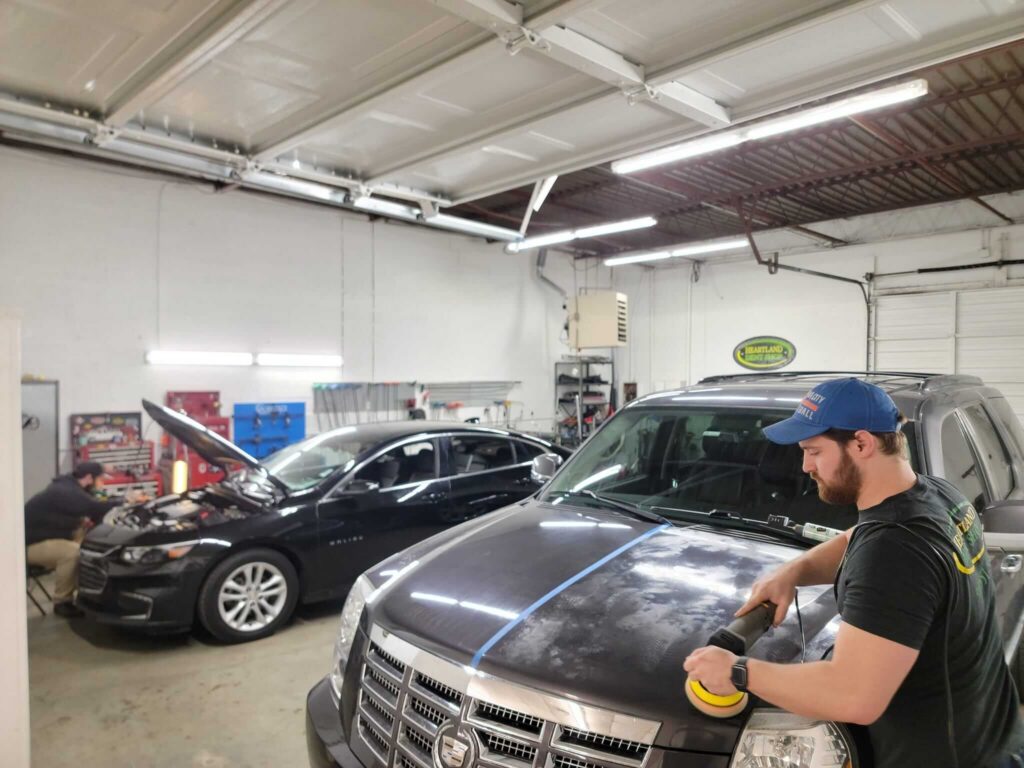
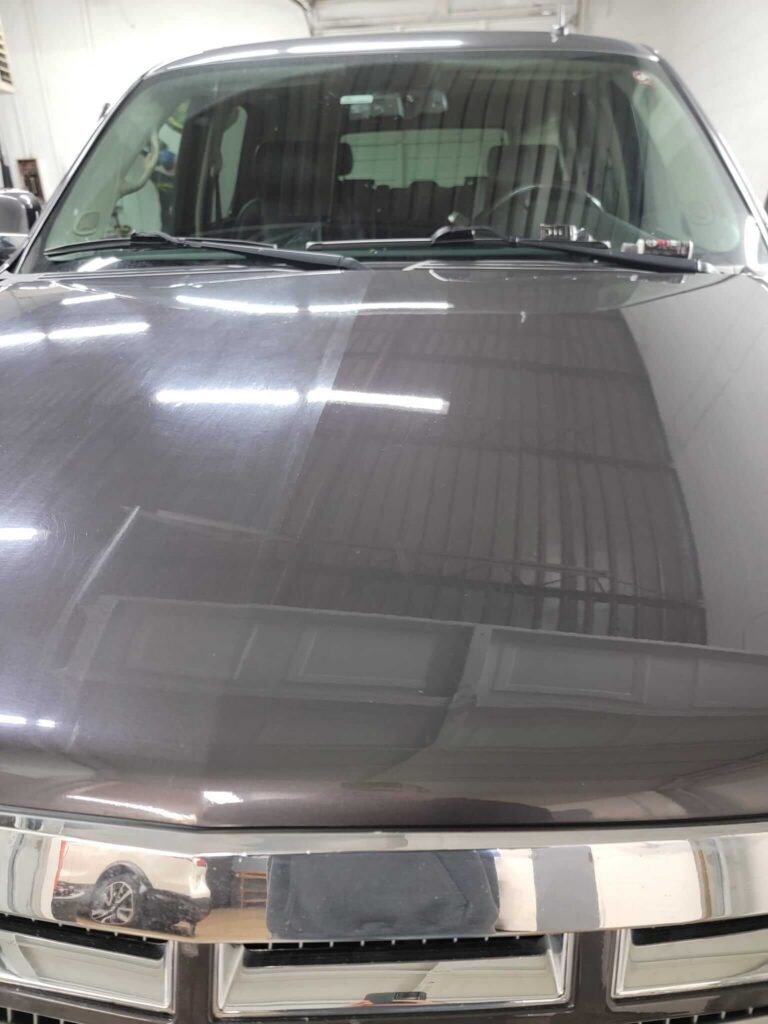
A coating seals in whatever is underneath it. Apply one over swirl marks and hazing and you have just preserved those swirls for the next several years. That is why our ceramic package includes the complete Paint Correction service first — clay bar decontamination plus multi-step machine correction — before any coating goes on.
It is also why our price is higher than shops quoting a coating alone. They are coating the car you brought in. We are coating the car after we have made it right. If a quote seems low, ask what correction is included; that is almost always the difference.
What it costs at our shop
Ceramic Coating runs $1,499 for a small vehicle and $1,899 for a large one, and that includes the full Paint Correction package (which itself includes the Full Detail). Paint Correction on its own is $1,099 / $1,299. Add-on ceramic for windows ($19), interior ($19) and leather ($29) is inexpensive relative to the main service and worth taking. All our pricing is published — no calling to find out.
When it’s worth it, and when it isn’t
Worth it: a vehicle you plan to keep several years, a new or nearly-new car you want to protect from the start, dark paint that shows every swirl, or a car you’re preparing to present exceptionally at sale.
Probably not worth it: a lease you’re returning in eight months, a vehicle with paint already too far gone for correction to fix, or a work truck that lives outdoors and gets treated accordingly. In those cases a Full Detail at $389–$429 is the smarter spend, and we’ll tell you so.
Keeping it working
A coating performs based on how it’s maintained. Automatic brush washes — the same thing that created the swirls in the first place — will shorten its life considerably. Hand washing with clean media is the right approach, and our $75/month Maintenance Program exists precisely so you don’t have to think about it.
If you want a straight answer about whether your vehicle is a good candidate, bring it by 8618 E 46th St in Tulsa or call (918) 809-7438. We’d rather talk you out of it than sell you a coating over paint that needed something else first.
Related reading: what each level of paint protection actually does.
